
Can the gut microbiome unlock new therapeutics in mental health?

Janet Sasso and Rumiana Tenchov, Information Scientists at CAS, discuss the relationship between the gut microbiome and mental health, reporting on topics that CAS has explored over the recent years.
The gut-brain axis (GBA), a signalling pathway connecting the gastrointestinal tract and the central nervous system, has increasingly been found to influence our physical and mental health. On this basis, modulating the gut microbiome has emerged as a potential approach in treating mental health disorders, including anxiety and depression.
The gut microbiome is a popular area of research in the biotechnology industry. Data from the CAS Content Collection1 indicate that between 2021–2022, the ‘gut-brain relationship’ topic exhibited the greatest growth rate among topics related to gut microbiome research.
It is no surprise that the microbial therapeutics industry has developed into a multimillion-dollar industry, with the use of biotics fast becoming a common approach to address gut health. The term ‘psychobiotic’, first coined in 2013, describes living microorganisms which, when ingested in adequate amounts, exert health benefits in patients suffering with psychiatric illnesses2.
The gut microbiome: The ‘forgotten organ’
The first reports of human-associated microbiota date back to the 17th century when Antonie van Leeuwenhoek described five diverse types of oral bacteria3. However, it is only since the mid-20th century, when anaerobic organisms present in the microbiota were first studied in the lab, that significant technological advancements and a deeper understanding of microbiota emerged4.
The microorganisms forming the microbiome are predominantly bacteria but also include viruses, protozoa, fungi, and archaea5. Each person’s gut microbiome is unique and highly dynamic, influenced by the individual’s diet, medications, ethnicity, age, and general health6. The combined genome of the microorganisms that comprise the gut microbiome is estimated to be 100 times larger than the human genome, comprising more than 22 million genes7,8.
Often referred to as the ‘forgotten organ’,5,9,10 the gut microbiome is believed to play a role in effectively all physiological processes11,12. Human microbiota work with the digestive tract to serve five principal functions (Figure 1).
The CAS Content Collection includes over 250,000 scientific articles on gut/intestinal microbiome/microbiota. Microbiome-related literature has sharply increased over the last decade, with accelerated growth between 2021–2022.
A 2022 report estimated that >130 microbiome companies (including biotechnology, pharmaceutical, and biosciences companies, among others) were evaluating >200 pipeline therapies in different stages of development17.
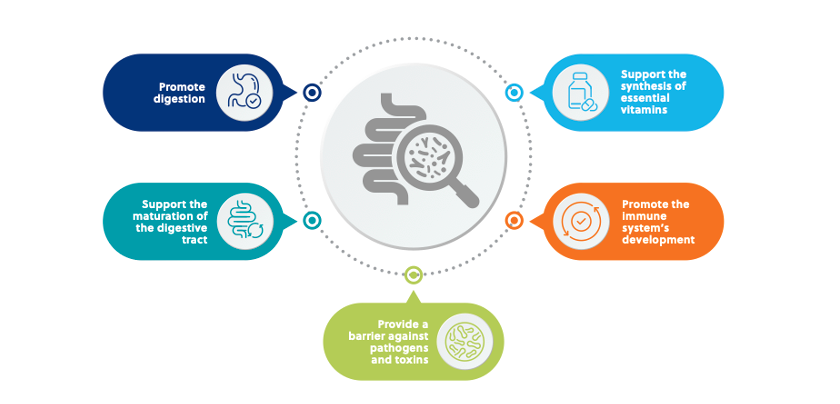 Figure 1: The five principal functions of the human microbiota.
Gut-brain axis: The link between the gut microbiome and mental health
The gut interacts with the brain through a neuro-hormonal network of signalling pathways collectively called the GBA18.
The gut microbiota communicates with the brain through neural, immune, and endocrine routes19. Importantly, the gut microbiome produces neurotransmitters that regulate brain activity, the most prominent being dopamine, norepinephrine, and glutamate-derivative γ-aminobutyric acid (GABA)20,21. These neuroactive substances may act locally within the enteric nervous system or on the brain by travelling through the blood or signalling via the vagus nerve. Therefore, we can hypothesise that gut microbial disruption (dysbiosis) may lead to mental health disorders19.
Indeed, alterations in the GBA that promote changes in the levels of microbial metabolites have been associated with conditions such as anorexia nervosa,22 chronic stress, and depression23. However, the underlying mechanisms remain unclear. Gut dysbiosis may also lead to increased levels of cortisol and proinflammatory cytokines, which are linked to stress responses, anxiety, and depression24.
In the field of mental health disorders, the levels of specific bacteria have been altered in the guts of patients with anxiety, post-traumatic stress disorder (PTSD), and depression (Table 1).
Our CAS Content Collection includes articles on the relationship between the gut microbiome and depression (1,243), cognitive disorders (374), anxiety (129) and eating disorders (82).
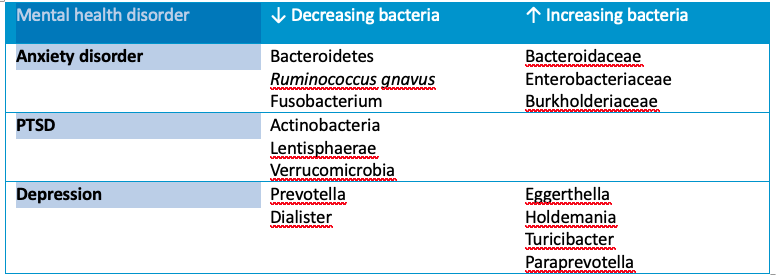 Table 1: Altered levels of gut bacteria in patients with mental health disorders. PTSD, post-traumatic stress disorder. Source: CAS Content Collection.
Targeting the GBA to treat mental health disorders
Based on our arguments above, the GBA presents an attractive target for developing novel therapeutics for mental disorders. Recent advances in the field have enabled us to better understand how disruptions in the GBA promote inflammation and alter responses to stress and behavioural states25.
The following classes of substances, collectively called “biotics”, have been used to target the GBA:26
- Probiotics — live microorganisms
- Prebiotics — substrates selectively used by host microorganisms
- Synbiotics — a mix of live microorganisms and substrates
- Postbiotics — a preparation of inanimate microorganisms and/or their components
- Faecal microbiota transplantation (FMT) — transplantation of healthy faecal bacteria from a donor to a recipient via colonoscopy
Based on the promising results of psychobiotics on controlling or modulating the GBA, clinical trials aim to identify bacterial strains as potential candidates for drug development, evaluating the strategies mentioned above for treating mental health disorders (Table 2).
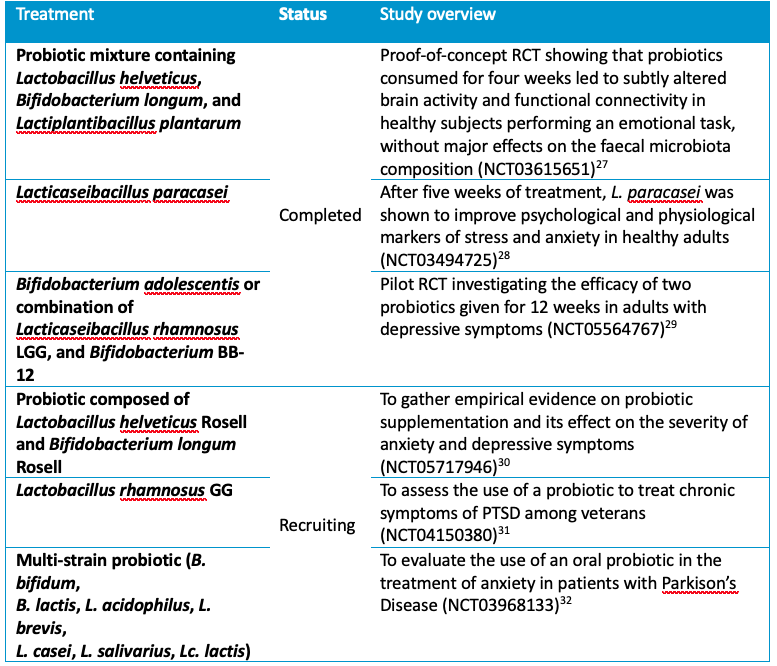 Table 2: A completed and ongoing studies of the microbiome and mental health disorders. PTSD, post-traumatic stress disorder; RCT, randomised clinical trial.
According to the US National Institutes of Health clinical trials website,33 between 2004–2022, probiotics were the most studied type of biotic when considering the treatment of mental disorders. Studies on prebiotics-based were comparatively fewer, while postbiotic and FMT were the least explored. he most studied mental health conditions and disorders included stress, depression, anxiety, and cognitive and sleep impairment.
Future perspectives
As research on the GBA and its relationship with mental health evolves, collaboration between biotech companies, academic institutions, and pharma is expected to continue. It is important to address knowledge gaps regarding the gut microbiome and its link with mental health disorders, including:
- Understanding how microbial metabolites influence brain function
- Identifying the immunological function of specific microbes in the gut microbiota
- Compiling empirical evidence to identify pathways of gut microbiota communication with the brain that affect emotional wellbeing
- Revealing the role of microbes in neurodegenerative/psychiatric disorders
The use of artificial intelligence (AI) to process large volumes of data may help us further understand the relationships between microbiota and diseases and, therefore, help identify biomarkers and therapeutic agents that can be used to tackle mental health disorders.
From DDW Volume 25 – Issue 4, Fall 2024 Read the digital issue
References:
- CAS. CAS Content Collection. https://www.cas.org/about/cas-content (accessed 2024-07-17).
- Dinan, T. G.; Stanton C.; Cryan J. F. Psychobiotics: a novel class of psychotropic. Biol Psychiatry. 2013, 74(10), 720–726. DOI:10.1016/j.biopsych.2013.05.001.
- Corliss, J. O. Three Centuries of Protozoology: A Brief Tribute to its Founding Father, A. van Leeuwenhoek of Delft. J. Protozool. 1975, 22, 3−7.
- Hungate, R. E. Chapter IV A Roll Tube Method for Cultivation of Strict Anaerobes. In Methods in Microbiology, Vol. 3; Norris, J. R., Ribbons, D. W., Eds.; Academic Press, 1969, 117−132.
- O’Hara, A.M.; Shanahan, F. The gut flora as a forgotten organ. EMBO Rep. 2006, 7(7), 688–693. DOI: 10.1038/sj.embor.7400731.
- Rinninella, E.; Raoul, P.; Cintoni, M.; Franceschi, F.; Miggiano, G. A. D.; Gasbarrini, A.; Mele, M. C. What is the Healthy Gut Microbiota Composition? A Changing Ecosystem across Age, Environment, Diet, and Diseases. Microorganisms. 2019, 7(1), 14. DOI: 10.3390/microorganisms7010014.
- Tierney, B. T.; Yang, Z.; Luber, J. M.; Beaudin, M.; Wibowo, M. C.; Baek, C.; Mehlenbacher, E.; Patel, C. J.; Kostic, A. D. The Landscape of Genetic Content in the Gut and Oral Human Microbiome. Cell Host Microbe. 2019, 26(2), 283–295.e8. DOI: 10.1016/j.chom.2019.07.008.
- International Human Genome Sequencing Consortium. Finishing the euchromatic sequence of the human genome. Nature. 2004, 431(7011):931–945. Supplementary appendix. doi:10.1038/nature03001.
- Baquero, F.; Nombela, C. The microbiome as a human organ. Clin Microbiol Infect. 2012, 18 (Suppl 4), 2–4. DOI: 10.1111/j.1469-0691.2012.03916.x.
- Evans, J. M.; Morris, L. S.; Marchesi, J. R. The gut microbiome: the role of a virtual organ in the endocrinology of the host. J Endocrinol. 2013, 218(3), R37–R47. DOI: 10.1530/JOE-13-0131.
- Hasan, N.; Yang, H. Factors affecting the composition of the gut microbiota, and its modulation. PeerJ. 2019, 7, e7502. DOI: 10.7717/peerj.7502.
- Butler, M. I.; Mörkl, S.; Sandhu, K. V.; Cryan, J. F.; Dinan, T. G. The Gut Microbiome and Mental Health: What Should We Tell Our Patients? Can J Psychiatry. 2019, 64(11), 747–760. DOI: 10.1177/0706743719874168.
- Jandhyala, S. M.; Talukdar, R.; Subramanyam, C.; Vuyyuru, H.; Sasikala, M.; Nageshwar Reddy, D. Role of the normal gut microbiota. World J. Gastroenterol. 2015, 21, 8787−8803. DOI: 10.3748/wjg.v21.i29.8787.
- Tomas, J.; Wrzosek, L.; Bouznad, N.; Bouet, S.; Mayeur, C.; Noordine, M. L.; Honvo-Houeto, E.; Langella, P.; Thomas, M.; Cherbuy, C. Primocolonization is associated with colonic epithelial maturation during conventionalization. FASEB J. 2013, 27, 645−655.
- Caballero, S.; Pamer, E. G. Microbiota-mediated inflammation and antimicrobial defense in the intestine. Annu. Rev. Immunol. 2015, 33, 227−256.
- Magnúsdóttir, S.; Ravcheev, D.; de Crécy-Lagard, V.; Thiele, I. Systematic genome assessment of B-vitamin biosynthesis suggests cooperation among gut microbes. Frontiers in Genetics. 2015, 6, 148.
- PR Newswire. Microbiome Clinical Trial Pipeline Space Brims with Novel Emerging Therapies with 130+ Key Players Working in the Domain | DelveInsight. https://www.prnewswire.com/news-releases/microbiome-clinical-trial-pipeline-space-brims-with-novel-emerging-therapies-with-130-key-players-working-in-the-domain–delveinsight-301672552.html (accessed 2024-07-17).
- Bravo, J. A.; Forsythe, P.; Chew, M. V.; Escaravage, E.; Savignac, H. M.; Dinan, T. G.; Bienenstock, J.; Cryan, J. F. Ingestion of Lactobacillus strain regulates emotional behavior and central GABA receptor expression in a mouse via the vagus nerve. Proc. Natl. Acad. Sci. U. S. A. 2011, 108, 16050−16055. DOI: 10.1073/pnas.1102999108.
- Mayer, E. A.; Knight, R.; Mazmanian, S. K.; Cryan, J. F.; Tillisch, K. Gut microbes and the brain: paradigm shift in neuroscience. J. Neurosci. 2014, 34, 15490−15496. DOI: 10.1523/JNEUROSCI.3299-14.2014.
- Dodd, D.; Spitzer, M. H.; Van Treuren, W.; Merrill, B. D.; Hryckowian, A. J.; Higginbottom, S. K.; Le, A.; Cowan, T. M.; Nolan, G. P.; Fischbach, M. A.; et al. A gut bacterial pathway metabolizes aromatic amino acids into nine circulating metabolites. Nature. 2017, 551, 648−652. DOI: 10.1038/nature24661.
- Barrett, E.; Ross, R. P.; O’Toole, P. W.; Fitzgerald, G. F.; Stanton, C. γ-Aminobutyric acid production by culturable bacteria from the human intestine. J. Appl. Microbiol. 2012, 113, 411−417. DOI: 10.1111/j.1365-2672.2012.05344.x.
- Roubalová, R.; Procházková, P.; Papežová, H.; Smitka, K.; Bilej, M.; Tlaskalová-Hogenová, H. Anorexia nervosa: Gut microbiota-immune-brain interactions. Clin. Nutr. 2020, 39, 676−684. DOI: 10.1016/j.clnu.2019.03.023.
- Galland, L. The gut microbiome and the brain. J. Med. Food. 2014, 17, 1261−1272.
- Bear, T; Dalziel, J.; Coad, J.; Roy, N.; Butts, C.; Gopal, P. The Microbiome-Gut-Brain Axis and Resilience to Developing Anxiety or Depression under Stress. Microorganisms. 2021, 9(4), 723. DOI: 10.3390/microorganisms9040723.
- Cryan, J. F.; O’Riordan, K. J.; Cowan, C. S. M.; Sandhu, K. V.; Bastiaanssen, T. F. S.; Boehme, M.; Codagnone, M. G.; Cussotto, S.; Fulling, C.; Golubeva, A. V.; et al. The Microbiota-Gut-Brain Axis. Physiol. Rev. 2019, 99, 1877−2013.
- ISAPP Science. https://isappscience.org/ (accessed 2024-07-17).
- NIH. NCT03615651. https://clinicaltrials.gov/study/NCT03615651 (accessed 2024-07-17).
- NIH. NCT03494725. https://clinicaltrials.gov/study/NCT03494725 (accessed 2024-07-17).
- NIH. NCT05564767. https://clinicaltrials.gov/study/NCT05564767 (accessed 2024-07-17).
- NIH. NCT05717946. https://clinicaltrials.gov/study/NCT05717946 (accessed 2024-07-17).
- NIH. NCT04150380. https://clinicaltrials.gov/study/NCT04150380 (accessed 2024-07-17).
- NIH. NCT03968133. https://clinicaltrials.gov/study/NCT03968133 (accessed 2024-07-17).
- NIH. Clinicaltrials.gov. http://ClinicalTrials.gov (accessed 2024-07-17).
About the authors:
 Janet Sasso earned her BS in Biology from The Ohio State University. She also holds her Master of Public Health from OSU where she focused her research on public health equity and education. She joined CAS in 2006 as an Information Scientist in the life sciences department curating pharmacology, pharmaceutical, environmental science, and toxicological research information.
 Rumiana Tenchov (Koynova) holds PhD and DSc degrees in biophysics from the Bulgarian Academy of Sciences. She has been a research faculty member at Northwestern University and The Ohio State University, and is currently an Information Scientist at CAS, a division of the American Chemical Society.