
Promising new therapy for ALS progresses to human trials
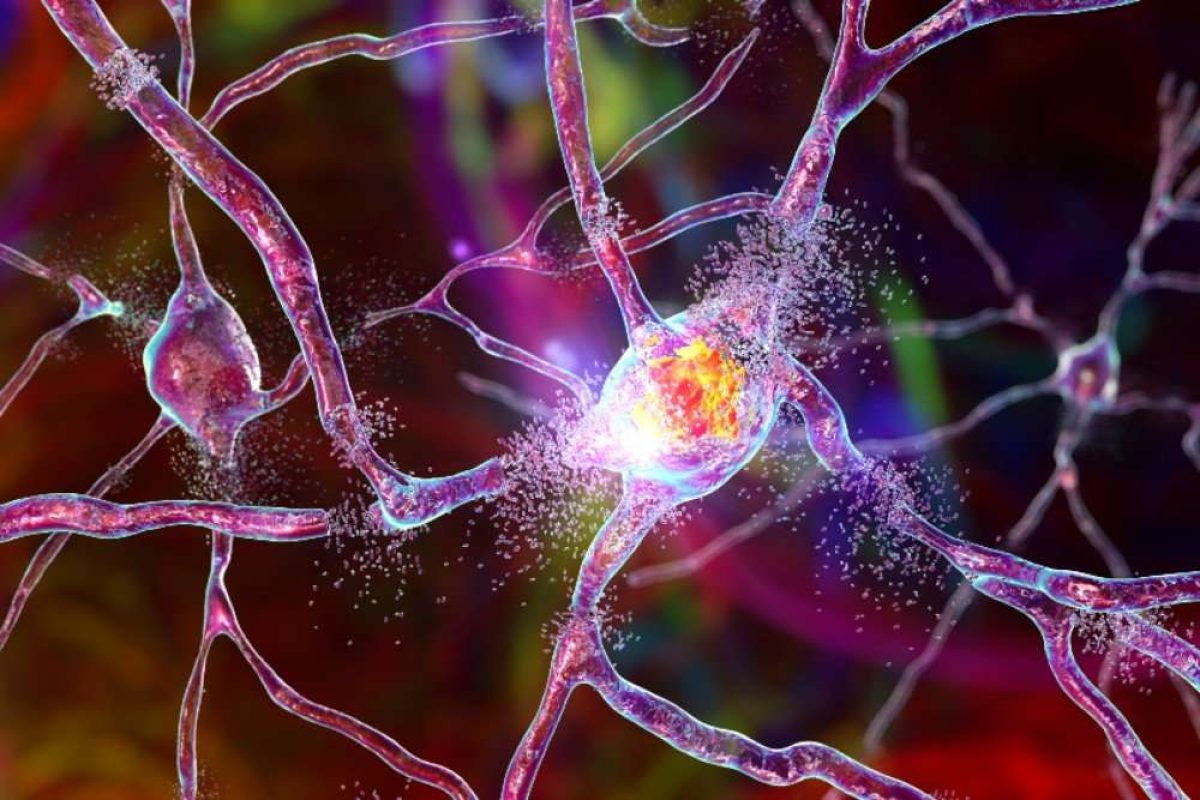
A new treatment for the most common type of motor neurone disease (MND) could improve the neuronal health of sufferers and allow their nervous systems to improve regeneration.
Ellorarxine, a novel drug compound developed by Nevrargenics, has demonstrated antioxidant and anti-inflammatory effects, which make it a promising new therapy for treating amyotrophic lateral sclerosis (ALS).
The peer reviewed study was published in the International Journal of Molecular Sciences by academics at Durham University.
The results showed that Ellorarxine significantly increases MAP2 expression at low concentrations (10nM), induces neurite outgrowth, increases mitochondrial viability to combat oxidative stress, ameliorates neuroinflammation and modifies GluA2 expression.
Nevrargenics is now proceeding to human trials with Ellorarxine, after receiving the green light from the UK Medicines and Healthcare products Regulatory Agency (MHRA).
Professor Paul Chazot of Durham University, lead supervisor of the study, said: “I have been looking for a drug like Ellorarxine for over 30 years. It addresses the ‘3Ns’ Neuroprotection, Neuroplasticity and Neurorepair, which provides a rational solution to combatting the complexity of neurodegenerative diseases, including MND.”
Neuroprotective and neuroreparative properties
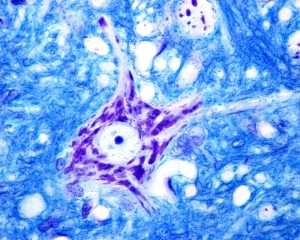 Light micrograph of a motor neurone (nerve cell) showing Nissl bodies of coarse type in the cell body and dendrites. Nissl bodies are stained dark violet, while myelinated fibres are stained blue. Luxol fast blue stain.
The study success builds on recent results from another study conducted by academics at Aberdeen and published in Frontiers in Neuroscience, which showed Ellorarxine crosses the blood-brain barrier, concentrates in the spinal cord, provides excitotoxic neuroprotection and reduces stress granules.
Retinoids appear to be essential in neuronal cell activity and have been implicated in ALS pathogenesis.
Ellorarxine is based on Nevrargenics’ retinoic acid receptor (RAR) modulator technology, and so the study was designed to assess the novel drug’s pharmacological mechanisms, neuroprotective and neuroreparative properties and relevance to ALS.
Andy Whiting, Emeritus Professor and CEO at Nevrargenics, said: “Many neurodegenerative diseases share the same key mechanisms and so the evidence generated by these studies warrants further investigation as to the true potential Ellorarxine has across different diseases. This study moves us closer to achieving our goal of bringing a drug to market and is testament to the power of conducting scientific research simultaneously across institutions to accelerate drug discovery.”
Diana Spencer, Senior Digital Content Editor, DDW