
Antibody cocktail effective against emerging Covid-19 variants
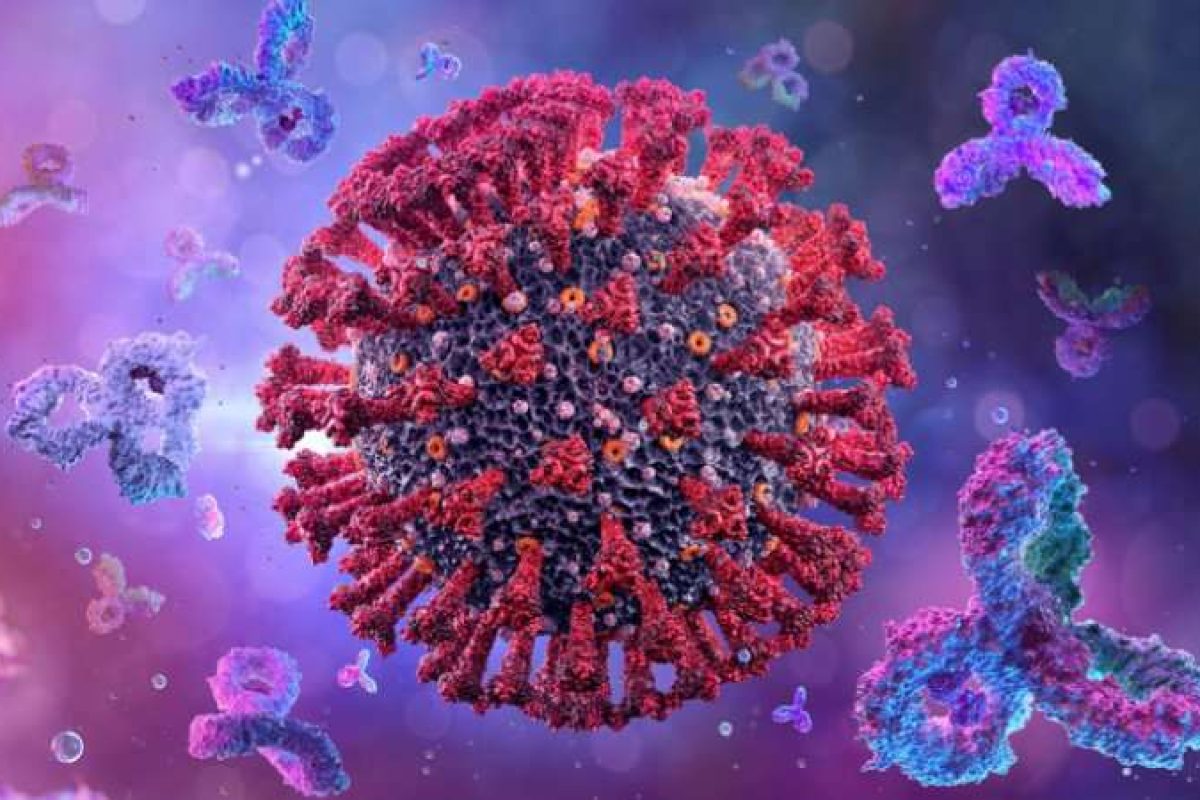
Biotech company ExeVir Bio has revealed new data demonstrating that its antibodies are effective in neutralising currently circulating Covid-19 Omicron variants.
The company says that all authorised SARS-CoV-2 therapeutic antibodies that have been used in the clinic show severe to complete loss of virus neutralisation potency against the currently circulating variants.
ExeVir’s XVR012, a cocktail of XVR013m and XVR014, targets three distinct epitopes highly conserved across the broad sarbecovirus subgenus of Coronaviridae to minimise the risk for viral escape.
XVR013m is a heavy chain-only antibody targeting a unique membrane-proximal epitope in the S2 subunit of the spike protein. XVR014 is a bispecific heavy chain-only antibody that, complementary to XVR013m, targets two epitopes in the receptor-binding domain of the S1 subunit of the spike protein. XVR013m and XVR014 neutralise both SARS-CoV-1 and SARS-CoV-2 viruses.
XVR012 demonstrates an IC50 range of 0.8 to 1.8ng/mL (pseudovirus neutralisation assay) against all SARS-CoV-2 variants evaluated so far, including the currently highly prevalent E.G.5.1, HV.1 and BA.2.86.1.
Strong need for antibodies against Covid variants
Dr Torsten Mummenbrauer, CEO of ExeVir, said: “Whilst an end was declared to Covid-19 as a public health emergency by the WHO, the pandemic is still continuing, and Covid-19 has sadly not been conquered. It remains an ongoing life-threatening challenge for immunocompromised patients, and the elderly, who total around 4% and 10% respectively of the world population and remain at high risk of severe Covid-19 disease, despite the availability of current vaccines.
“Our unique and powerful approach of targeting three highly conserved epitopes in the SARS-CoV-2 spike protein with our cocktail XVR012 is anticipated to be highly potent against virtually all currently circulating variants under monitoring, including EG.5.1, HV.1, and BA.2.86.1. There is still a strong need for novel antibodies that work against the newest Omicron variants, and these new data demonstrate that ours can be part of the solution.”